Understanding Emotions as Data
Understanding Emotions as Data
Emotions are powerful. They affect how we think, act, and interact with others. Recognizing emotions as data can transform the way we understand ourselves and guide us toward personal growth and better relationships. Let’s dive into this concept to appreciate how emotions serve as valuable signals rather than mere instructions.
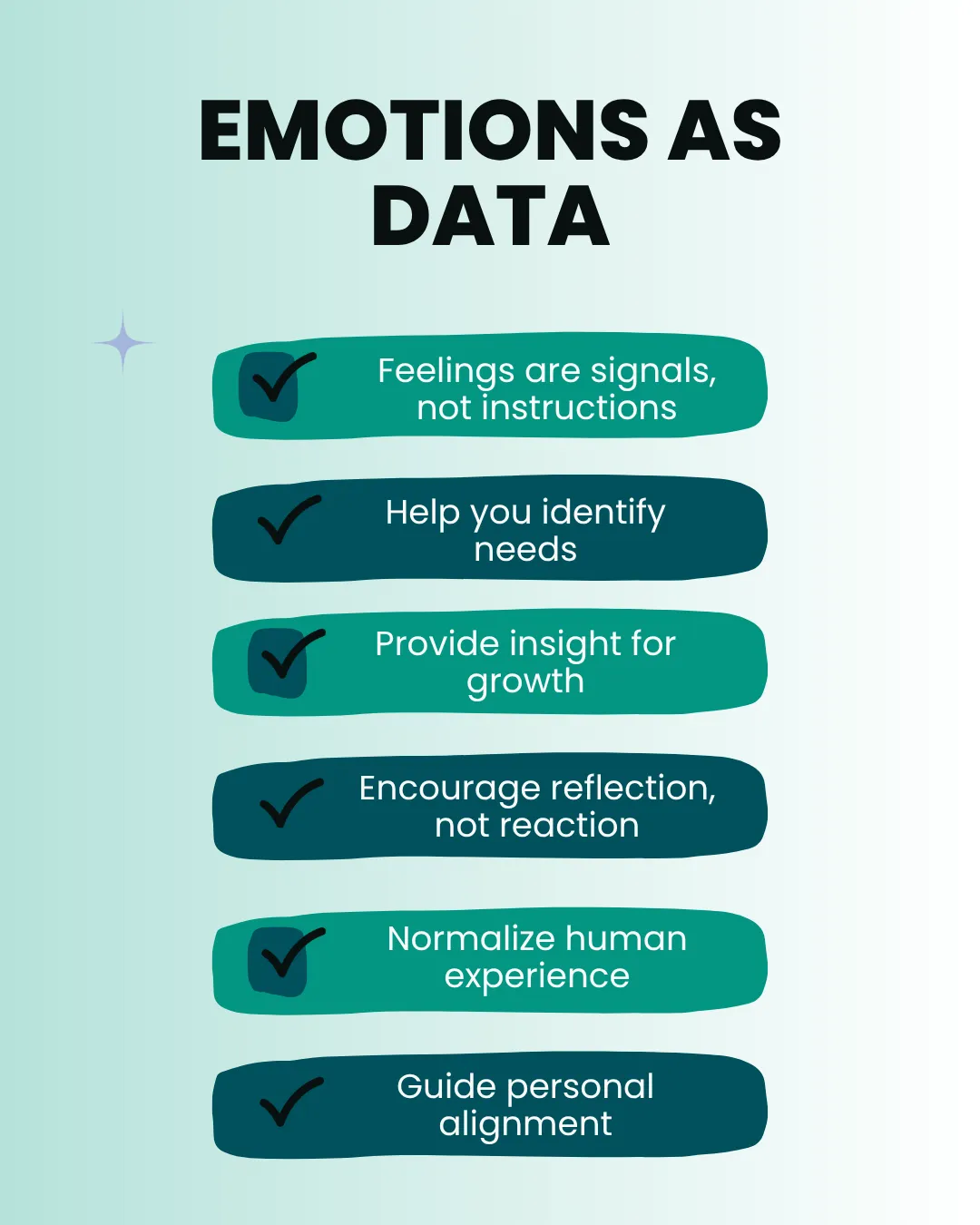
Feelings Are Signals, Not Instructions
Many people believe emotions dictate our actions. However, emotions are signals rather than instructions. They inform us about our internal states, helping us pause and reflect. For example, feeling sad might indicate a need for connection, while anger might highlight a boundary issue. By understanding emotions this way, we empower ourselves to make decisions consciously rather than reactively.
Help You Identify Needs
Emotions play a critical role in identifying our needs. When we feel something strongly, it’s a signal that something may need attention. Consider these points:
- Sadness might suggest a need for support or understanding.
- Stress might mean you need more rest or relaxation.
- Joy shows you what adds value to your life and what you should seek.
By recognizing what emotions are signaling, we can respond to our needs more effectively.
Provide Insight for Growth
Emotions are clues for where growth can happen. They provide insights into what challenges us and where we can improve. Reflect on these experiences:
- If you feel anxious in social settings, it may be a chance to work on communication skills.
- Feeling disappointed might signal the need to reassess your expectations.
Seeing emotions as part of your personal growth toolkit helps you develop resilience and adaptability.
Encourage Reflection, Not Reaction
Reacting impulsively to emotions can often lead to regretful actions. Instead, use emotions as an opportunity for reflection. This pause allows you to:
- Gain perspective on the situation.
- Understand the underlying reasons for your feelings.
- Choose a response that aligns with your values.
By reflecting rather than reacting, you create space for thoughtful decision-making.
Normalize Human Experience
Everyone experiences emotions. Accepting them as a normal part of life helps us connect with others and ourselves. It eliminates the stigma of needing to appear "okay" all the time. When we accept emotions as data:
- We understand everyone feels both positive and negative emotions.
- We build empathy towards others’ experiences.
This understanding fosters a compassionate and connected community.
Guide Personal Alignment
Emotions guide us towards personal alignment, ensuring our actions and values match. Here’s how they help:
- Feeling out of place might indicate a misalignment with your surroundings or goals.
- Excitement and satisfaction show you’re on the right path.
Tuning into these cues allows you to align your life with what truly matters to you.
Conclusion
Embracing emotions as data transforms how we perceive and utilize them for personal and relational growth. Remember, emotions are insightful signals guiding us to understand our needs, challenges, and alignments better. By considering these emotional signals, you'll develop healthier habits and live a more fulfilling life. Next time an emotion arises, take a moment to listen and reflect—your future self will thank you.