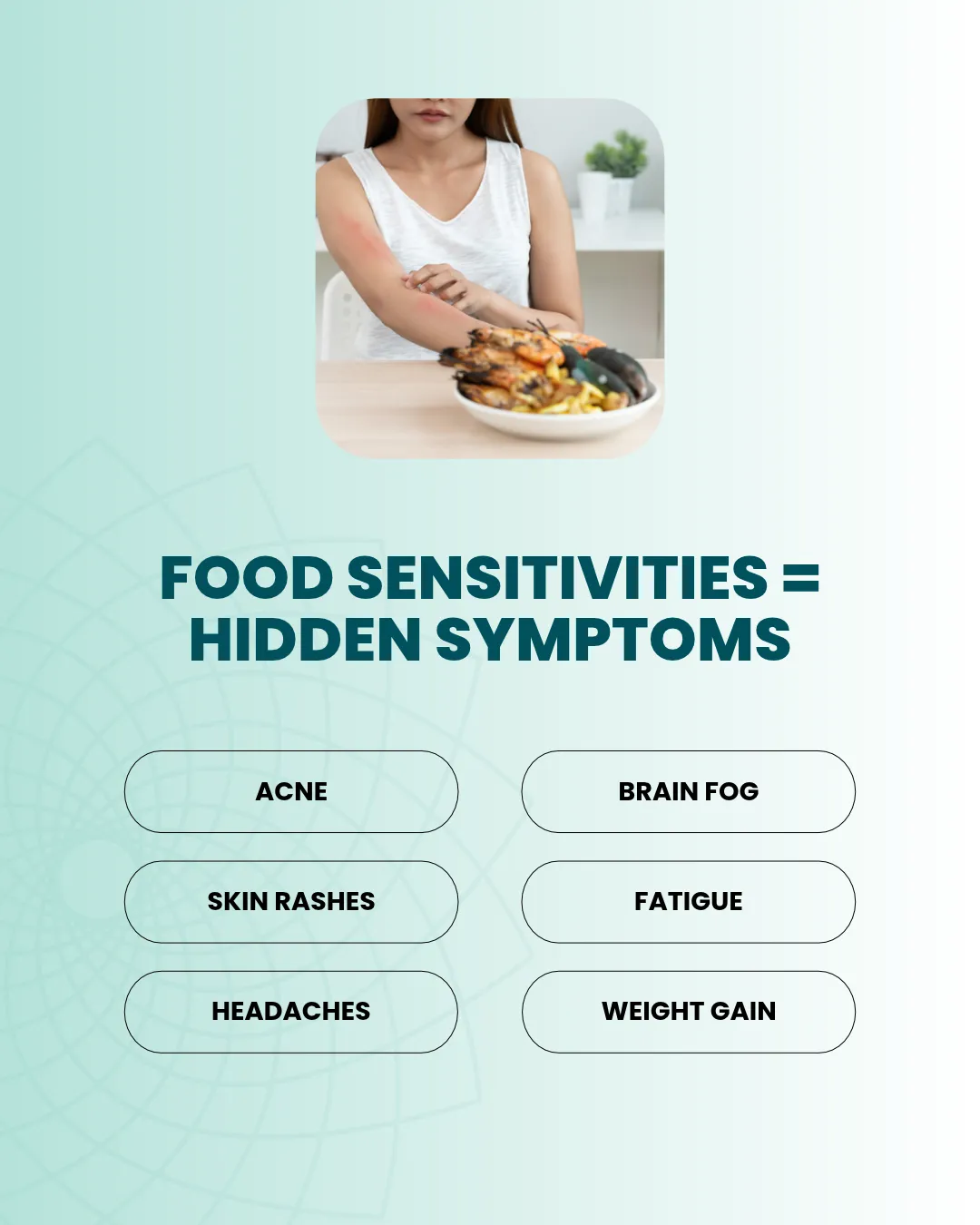
Uncover Hidden Symptoms of Food Sensitivities
Understanding Food Sensitivities: Unveiling Hidden Symptoms
Food is essential for our health, but for some, certain foods may cause discomfort. These discomforts, known as food sensitivities, can sometimes lead to hidden symptoms that impact daily life. This blog will explore what food sensitivities are, their symptoms, and how they affect the body.
What Are Food Sensitivities?
Food sensitivities occur when the digestive system struggles to break down certain foods. Unlike allergies that provoke immediate responses, sensitivities can lead to delayed symptoms, making them hard to identify.
Common culprits include:
- Dairy
- Gluten
- Eggs
- Nuts
- Soy
These foods might not cause visible reactions right away, but they can lead to discomfort and subtle health problems.
Hidden Symptoms of Food Sensitivities
Recognizing these hidden symptoms is crucial to improving overall wellbeing. Here are common issues linked to food sensitivities:
- Acne: Skin problems like acne can emerge due to a reaction to certain foods, leading to inflammation.
- Skin Rashes: Consuming problem foods might lead to itchy rashes or patches on the skin.
- Headaches: Persistent headaches could stem from food sensitivities, disrupting daily activities.
- Brain Fog: Difficulty concentrating or mental fatigue might be linked to certain foods.
- Fatigue: Feeling constantly tired can be a sign that your body is reacting to something you ate.
- Weight Gain: Unexpected weight gain might be due to triggers from certain foods.
How to Identify Food Sensitivities
Discovering your food sensitivities requires careful attention:
- Food Diary: Keep a diary to track what you eat and any symptoms that occur. This helps in pinpointing problem foods.
- Elimination Diet: This involves removing foods believed to cause symptoms, then reintroducing them slowly to see what triggers reactions.
- Consultation with a Healthcare Provider: They can recommend tests or provide guidance tailored to individual needs.
Steps to Manage Food Sensitivities
Once identified, managing food sensitivities can lead to a healthier life. Here are some strategies:
- Read Labels Carefully: Watch out for hidden ingredients in processed foods that might cause reactions.
- Prepare Meals at Home: Cooking at home grants control over ingredients, reducing the risk of accidental exposure.
- Experiment with Alternatives: Substitute problem foods with alternatives that suit your dietary needs.
Potential Benefits of Managing Food Sensitivities
By recognizing and managing food sensitivities, individuals can experience the following benefits:
- Improved Skin Health: Reduction in acne and rashes leads to clearer skin.
- Better Mental Clarity: Less brain fog means enhanced focus and productivity.
- Increased Energy Levels: Minimizing fatigue helps sustain energy throughout the day.
- Healthy Weight Management: Maintaining or reaching a healthy weight becomes easier.
Conclusion
Understanding and managing food sensitivities is an important step toward living a healthier, more comfortable life. By learning to identify hidden symptoms and making dietary adjustments, individuals can enjoy better health and overall wellbeing. Always consult a healthcare professional to tailor a plan that suits your specific needs.
Stay mindful and listen to what your body is telling you. It's time to take control of your health and uncover the hidden triggers holding you back.