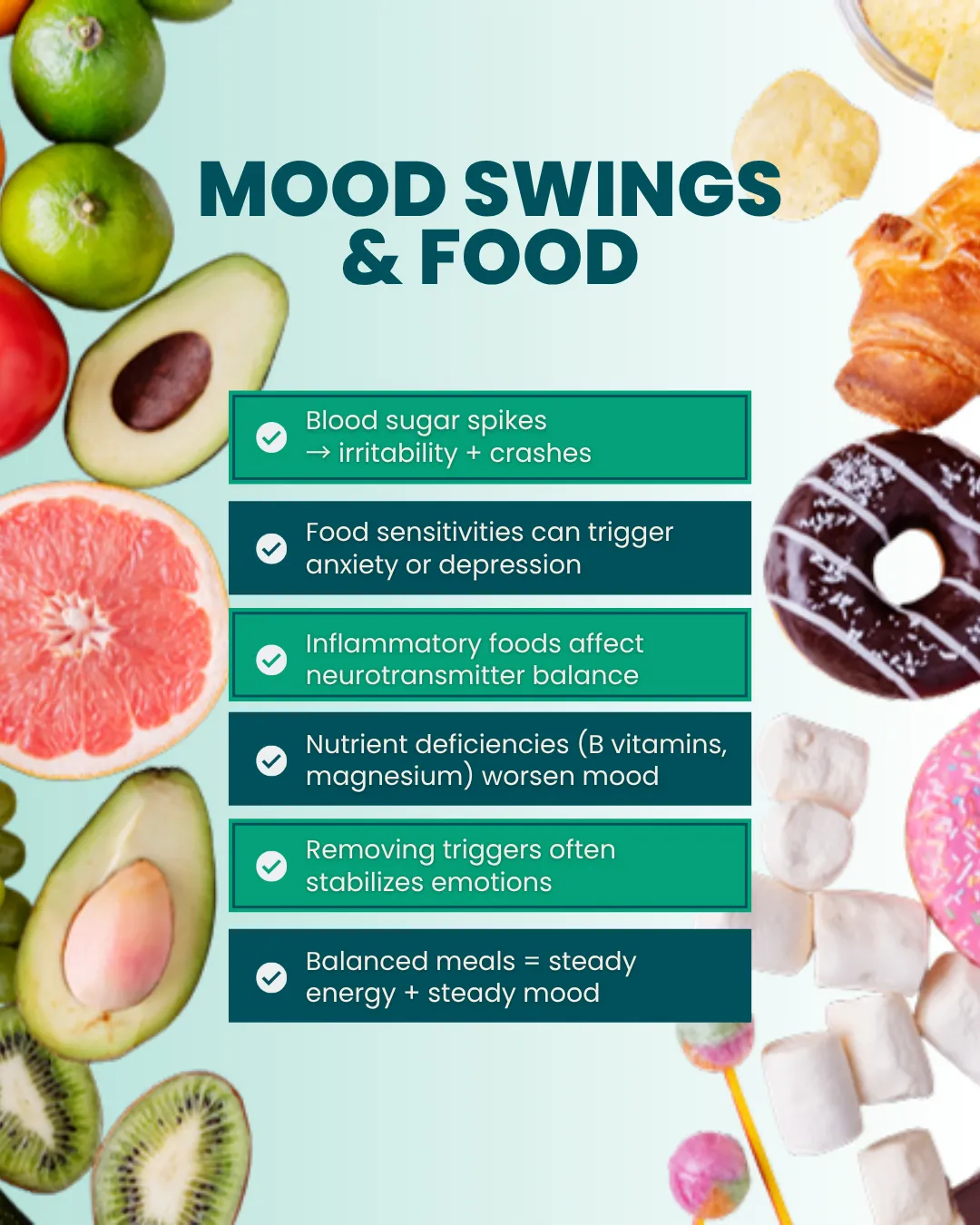
How Food Affects Mood Swings
Understanding the Connection Between Mood Swings and Food
When you think about mood swings, you might not immediately link them to food. However, what we eat can greatly influence how we feel. Food isn't just fuel for our bodies; it has a direct impact on our minds as well. By understanding the relationship between food and mood swings, we can make better dietary choices that support our mental health.
The Effects of Blood Sugar Spikes
One of the primary ways food affects mood is through blood sugar levels. Rapid changes in blood sugar can lead to feelings of irritability and energy crashes. Foods high in sugar or refined carbohydrates cause these spikes. To maintain a steady mood:
- Avoid sugary snacks and drinks.
- Opt for whole grains instead of refined grains.
- Incorporate protein-rich foods to balance carbohydrates.
Impact of Food Sensitivities
Food sensitivities can also play a role in mood disorders such as anxiety and depression. When the body reacts negatively to certain foods, it can trigger emotional responses. Common culprits include gluten, dairy, and soy. To identify possible food sensitivities:
- Keep a food diary to track meals and mood changes.
- Consider an elimination diet to identify problem foods.
- Consult with a healthcare provider for guidance.
Inflammatory Foods and Neurotransmitter Balance
The foods we eat can affect neurotransmitter balance, which is vital for mood regulation. Inflammatory foods, such as processed meats and trans fats, can disrupt this balance. To reduce inflammation:
- Incorporate anti-inflammatory foods like fruits and vegetables.
- Use healthy fats such as olive oil and avocados.
- Choose lean proteins over processed meats.
Nutrient Deficiencies
Nutrient deficiencies in vitamins and minerals can worsen mood swings. B vitamins and magnesium are particularly important for mental health. To ensure adequate intake, consider:
- Eating a variety of fruits and vegetables.
- Including nuts and seeds in your diet.
- Taking supplements if necessary, after consulting with a healthcare provider.
Removing Mood Triggers
Sometimes, the simplest solution is to remove triggers from your diet. By eliminating foods that consistently cause mood swings, you can stabilize your emotions. Here’s how:
- Identify and remove culprit foods.
- Replace them with healthier options.
- Monitor your mood to see the changes.
The Importance of Balanced Meals
Ultimately, balanced meals lead to steady energy and mood. By consuming a mix of carbohydrates, proteins, and fats, you can avoid the highs and lows of mood swings. A few tips include:
- Plan meals to include all three macronutrients.
- Snack on nuts, fruits, or yogurt for balanced energy.
- Maintain regular meal times to keep blood sugar stable.
Conclusion
In conclusion, our dietary choices have a powerful effect on our mental well-being. By being mindful of what we eat and making thoughtful adjustments, we can support more stable moods and improved mental health. Remember, every meal is an opportunity to make a positive impact on how you feel.